
It’s Time to Check Your Crawl Space
March 29, 2023
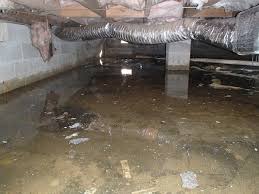
Hidden Trouble
This winter has dealt punishment to our homes to a degree that we’ve hardly ever seen before, and it has put a ton of stress on just about every aspect of the house: The roof, windows, rain gutters, trees, and fences have all been put to the most severe of tests, and many of you probably have horror stories to tell about their various failures. But there’s one are of the house that many people never look at, and it too has likely taken an absolute beating with all of the rain we’ve had, and it’s equally important as every other part of your home: Your crawlspace.
Yes, I’m referring to that little trap door that’s either located outside of your home or perhaps in one of your closets – that door that we almost never open because we don’t want to see spiders or rats or get a whiff of that wonderfully musty smell. But it’s one of the most vital parts of your home, and probably the most susceptible to the inclement weather we’ve all been suffering through because water can easily get under your house and start to wreak havoc if you ignore it.
Most homes in San Carlos and all along the peninsula were built with crawl spaces, but there are some homes that are built on slabs. Your crawl space contains all kinds of critical components to your home: Heating ducts, electrical wiring, insulation, water and sewer pipes, and most important, the wooden underpinnings of your home. None of these components do well when you have standing water under your home.
Why Does This Happen?
There are a variety of reasons why many homes in San Carlos have standing water underneath them.
- Poor Drainage. Although there are more new homes being built and older homes undergoing modifications, most of the housing stock in San Carlos still dates back to the 40’s and 50’s and back then, there was no thought put into keeping water away from the foundation. Many homes you see today have downspouts that discharge the water from the roof right next to the house, and most of that water heads right under the house. Newly constructed homes generally have the downspouts tied together in a drain line that runs the water away from the house.
- Clay Soil. Many of the homes located in the flatlands of the Peninsula are sitting on top of clay-based soil, and clay tends to retain water and doesn’t drain quickly like regular sand or soil. So once it gets too much moisture, water just puddles under the house. More on the perils of clay soil below.
- High Water Tables. There quite a few subterranean streams that traverse San Carlos on their way to the bay, and some of these run quite close to the surface. If you have a home that sits on top of one of these streams, water can literally percolate upward and into your crawl space — even in the absence of rain. I once saw a house in the month of August (no rain for 6 months) and the crawl space was a swamp — mostly because of the high water table. And the closer you live to the bay, the worse the problem is because you are impacted more by high tides.
What Happens if You Don’t Fix It?
If you suspect that you have standing water under your house, the worst thing you can do is ignore the problem. Water is one of the most destructive elements to a home, and because the water is in place where it’s less likely to evaporate naturally, it will just sit there and wreak havoc on your home. Here are just a few things it can do:
- Wood Damage. The worst case scenario is if water is making direct contact with any wooden structure in the house. No matter if it’s pressure treated – prolonged contact with water will eventually rot out the wood. But even if it’s not in direct contact, the humidity from all of the water will eventually be absorbed by the plywood sub-flooring. And once that get saturated, it gets absorbed into your hardwood floors. If you’ve ever gone into a home an noticed floors that are “cupping”, or when the sides of each hardwood strip are curling up, this is exactly what is happening.
- Foundation Stress. Because clay soil expands when it gets wet, and then contracts when it dries out, this puts a lot of stress on your foundation which is known in the industry as “heaving”. Heaving in the worst cases can result in cracks in the foundation, and even stress cracks inside of your house. If you have these pesky recurring cracks that happen in your drywall, that’s usually why it’s happening.
- Termites. Wet soil and wood is a breeding haven for subterranean termites. Most crawl spaces have some amount of “cellulose debris”, which is a fancy term for wood scraps and other stuff that termites feast on. Termites thrive in wet environments.
- Mold and Mildew. Areas that are constantly wet and have poor ventilation are perfect environments for mold to grow. Aside from the obvious health danger to mold exposure, remediating black mold once it starts to grow is an arduous and expensive endeavor. It’s far better to be proactive rather than reactive.
Who Are You Going to Call?
Unfortunately, spending money on your crawl space is akin to getting the transmission fixed in your car. It’s money you spend but you never see. But yet both are still vital expenditures. Getting the water out and keeping it out can be as straightforward as installing a sump pump, or it can be an elaborate network of french drains, sump pumps, and encapsulating the underside of the house with waterproof vinyl. Costs can run the gamut from several hundred dollars to tens of thousands of dollars, depending on what needs to be done.
The good news is that there a contractors out there who specialize in the overall health of your crawl space and can remediate even the most severe cases. If you know you have a problem under you house and don’t know who to call, reach out to me and I can give you some referrals. But the last thing you want to do is ignore the problem, because it will only get worse and more expensive over time.
Or as the old saying goes, an ounce of prevention is worth a pound of cure.
Posted in: